Raglan Rogues
Kavanagh and Behan on stage together for the first time. A play by Kevin Burns, The Purty Kitchen in early 2027
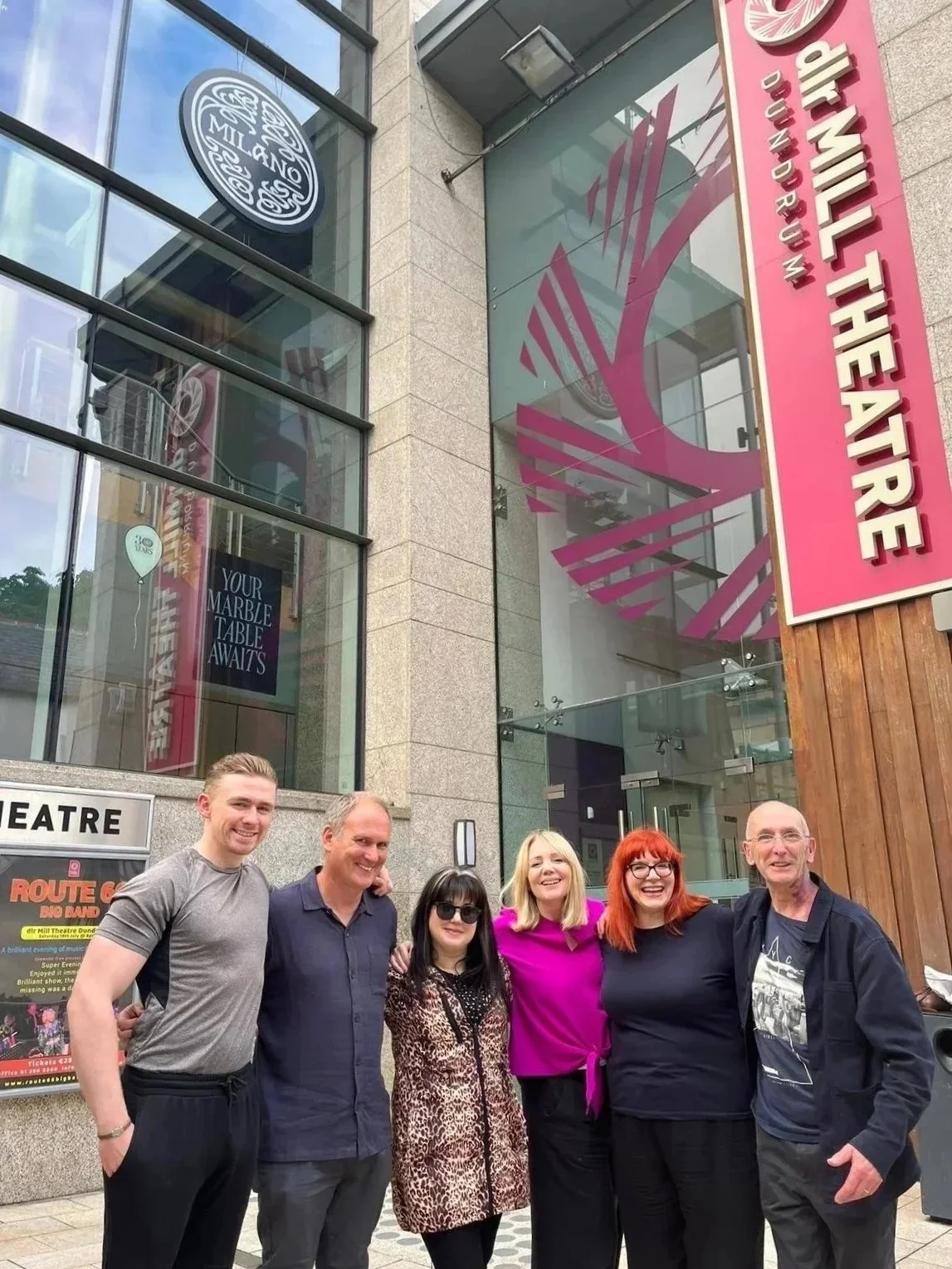
Raglan Rogues cast and crew after their performance at The Mill Theatre Dundrum June 2025. From left, Josh Winters, Kevin Burns, Sheila Moylette, Tracy Ryan, Kaeylea Van Keith, Declan Gorman.
Raglan Rogues at The Purty Loft
Raglan Rogues is being performed at The Loft in The Purty Kitchen, Dún Laoghaire on three dates in early 2027.
The characters of Brendan Behan and Patrick Kavanagh will be together on the same stage for the first time.
Irish people hold a special place in their hearts for the two writers which is clear from the way visual commemorations can be seen so widely most notably the two statues on benches overlooking the waterways they celebrated in their work: Kavanagh on the Grand Canal and Behan on the Royal.
This production will tell the remarkable story of a friendship which ultimately and inevitably didn’t last and was replaced by a relationship which was at times fractious, destructive, and even bullying. It’s a relationship whose mysteries fascinated generations of Irish people, but in recent years has become largely unknown.
You can trace the start of that public fascination to 1954 when Kavanagh shocked the country by revealing that he hated Behan. He made the revelation during cross- examination by John A. Costello, the former Taoiseach during a libel case he brought against The Leader for an anonymous profile of him which he felt was massively damaging to his reputation. The nation was already gripped by the case which was covered daily on the front pages of all Irish newspapers but the blanket publicity given to Kavanagh’s inimical opinion of Behan meant that the next day there was standing room only as hundreds of members of the public queued along the quays to gain entry to The High Court. Till their dying days both men remained tightlipped about the other writer.
If you come along to Raglan Rogues at The Loft in The Purty Kitchen in early 2027 you can expect to learn more about their relationship.
There will also be plenty of laughter and music including their iconic songs, On Raglan Road and The Aul Triangle.
Despite their talent, Behan and Kavanagh found it very difficult to have their work either be published or performed, particularly during the early part of their careers, so they would understand why we need your help to put on this show.
Perhaps you love either, or both men, and their work and you want their story to be told. Or maybe you can recognise the passion and talent of the team behind Raglan Rogues and you want to support them. If that’s true go straight to our GoFundMe page.
You might want to register your interest so that we let you know when the tickets are available. You can do that here.
Raglan Rogues: A Thirty-Year Journey
How an obsession with Patrick Kavanagh and Brendan Behan finally became a show which is being performed at The Loft in The Purty Kitchen, Dún Laoghaire on 12th, 13th and 14th August.
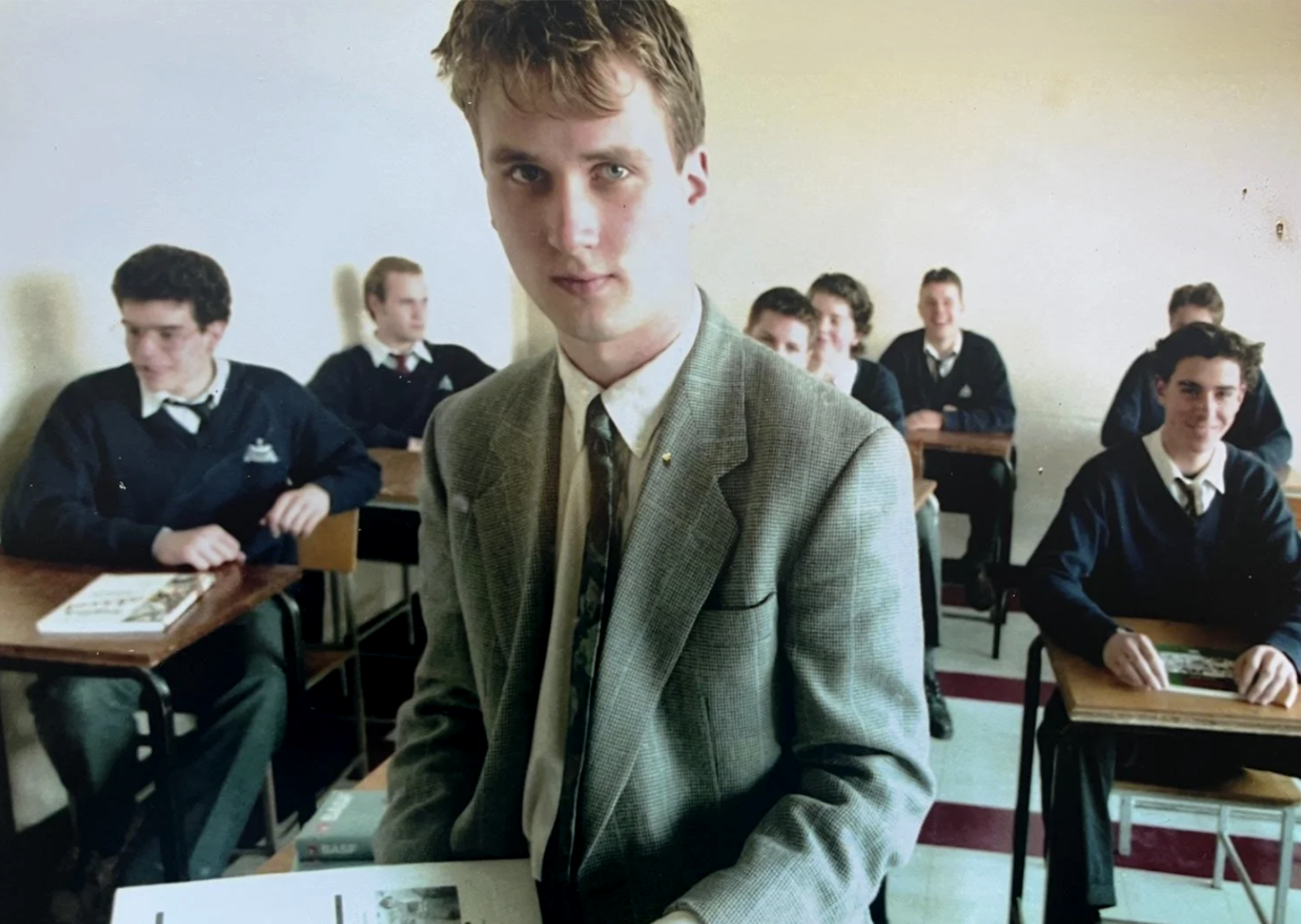
Kevin Burns teaching in 1994
The Photostats
It's 1994 and Tim Lehane, the radio presenter and producer, is sitting across from me in the RTÉ canteen. His programme Monday 7.02 has a small but loyal following, but Tim isn't exactly a household name. Still, it has taken me weeks to secure this meeting. He's one of my heroes, so I try to keep my hands steady as I lay out the photostats of newspaper articles.
I propose travelling back in time, I announce. Not using archives as everyone is doing these days. But with contemporaneous newspapers. This way we won't be looking at past events using a modern lens. Instead, I want to reveal what people actually thought and felt about subjects and events while they were actually happening.
This line went better when I rehearsed it the night before with me playing the part of Tim. The real Tim isn't quite so impressed. This is before the internet made all research easier, and the pages we’re looking at are the product of days of work at the National Library. Tim’s index finger rests on a photo from forty years earlier with a wary Patrick Kavanagh arriving at the High Court with his friend Anthony Cronin. His finger moves to another black and white front page featuring a disheveled Brendan Behan with his shirt open to the navel. The caption helpfully informs the reader that the suit he's wearing is blue.
There's a lot at stake for me with this meeting. The summer is ending and if I don't secure some media work soon, when September comes, I'll be returning to my job as a secondary school teacher and another nine months of explaining the tuiseal ginideach to disinterested teenagers.

Gay Byrne Show Radio Team 1998. From left, Kevin Burns, Peter Browne, Gay Byrne, Pat Dunne, Aonghus MacAnally.
The Twist in the Trial
Tim smiles to show he's curious to learn more, but I notice the smile doesn't reach his eyes.
Behan and Kavanagh?, he asks. Why were they on the front pages?
I'm speaking quicker now. I tell him how The Leader magazine’s anonymous profile of Kavanagh which so appalled the Monaghan man that he felt compelled to bring a libel action. How the ensuing High Court case gripped the country for weeks. At first, I think Tim is concentrating on what I’m saying but then I realise he's scowling. This is my first experience of a presenter not being as jovial as they seem on air. When they’re not on air they’re worried about how to make what’s on air the best they can.
But here's the twist, I tell him. It turns out they were once friends and the Dublin man even painted Kavanagh's flat in 1950. John A. Costello was defence counsel for The Leader. Tim looks quizzical, so I pause and clarify.
Yes, Tim, that John A. Costello, the former Taoiseach! He gave Kavanagh a terrible time during the cross-examination — asking him one thousand two hundred and sixty-seven questions. He accused him of being friends with Behan. He said he engaged him to paint his flat. This made Kavanagh angry. He denied that he was ever friends with Behan. Over and over. This was how the great Irish public first found out about Kavanagh’s dislike of Behan.
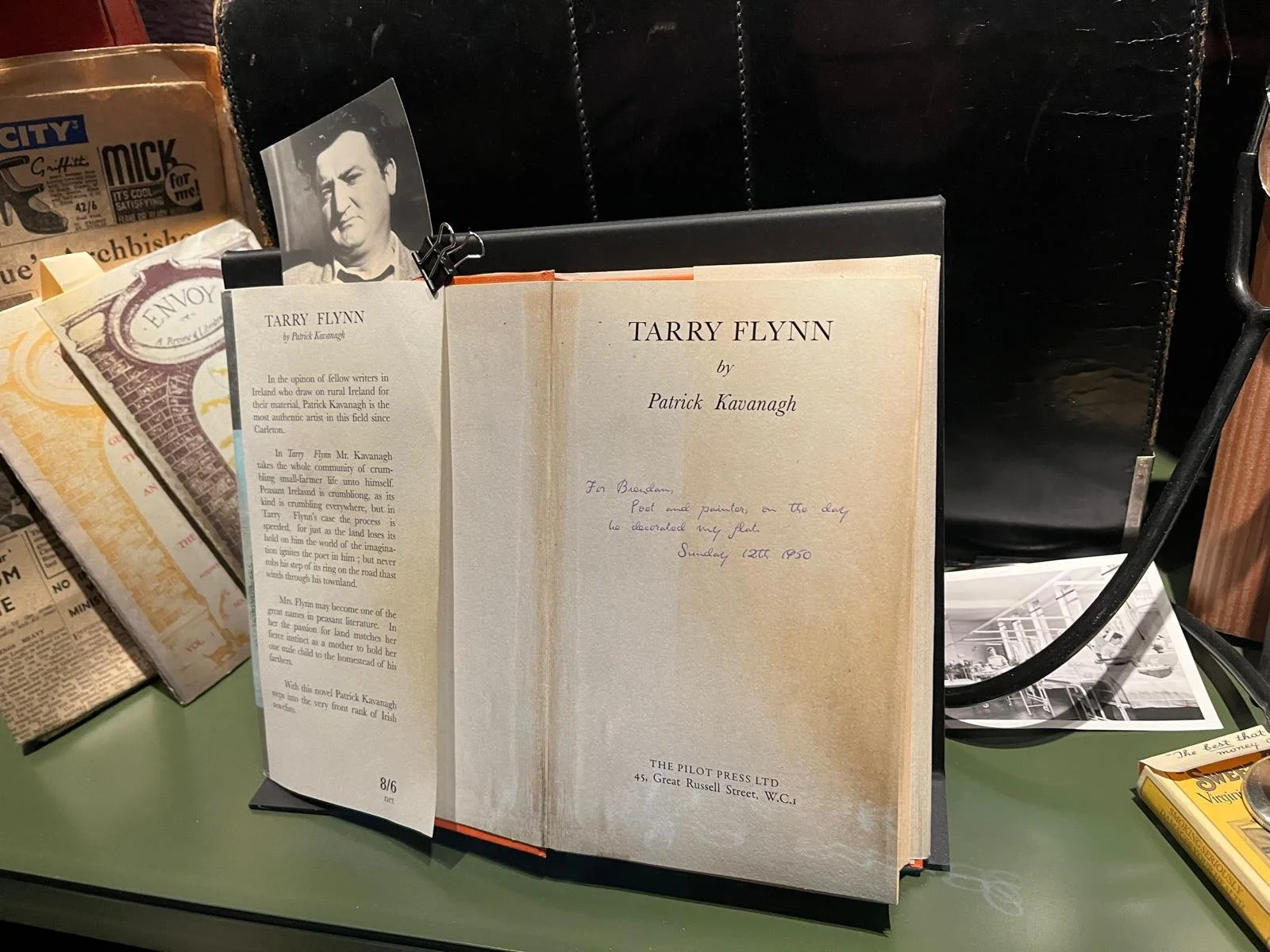
The following day, Costello produced one of Kavanagh’s books, Tarry Flynn, and asked him to read out to the court the simple dedication to Behan in the flyleaf.
For Brendan, poet and painter, on the day he decorated my flat, Sunday 12th 1950.
No month, I explain, just Sunday 12th 1950. And that lie, I say, ended any hope Kavanagh had of winning his case. It also began the Irish public's fascination with Kavanagh and Behan's fractious relationship. Why didn't they get on? They must have got on for Behan to paint Kavanagh's flat. Was it after that they fell out? And if so, why? After the trial the two men had contrasting fortunes: it wasn’t long before Behan became an international superstar, while within the year Kavanagh was diagnosed with cancer and had to have a lung removed. It was while recovering on the banks of the canal near his home that he wrote perhaps his best poems.
This court case was one of the biggest stories of the 1950s, I tell Tim, but my generation knows nothing about it.
Tim agrees that this story needs to be on the radio. This is such good news that I stop off at the school on my way home to hand in my resignation.
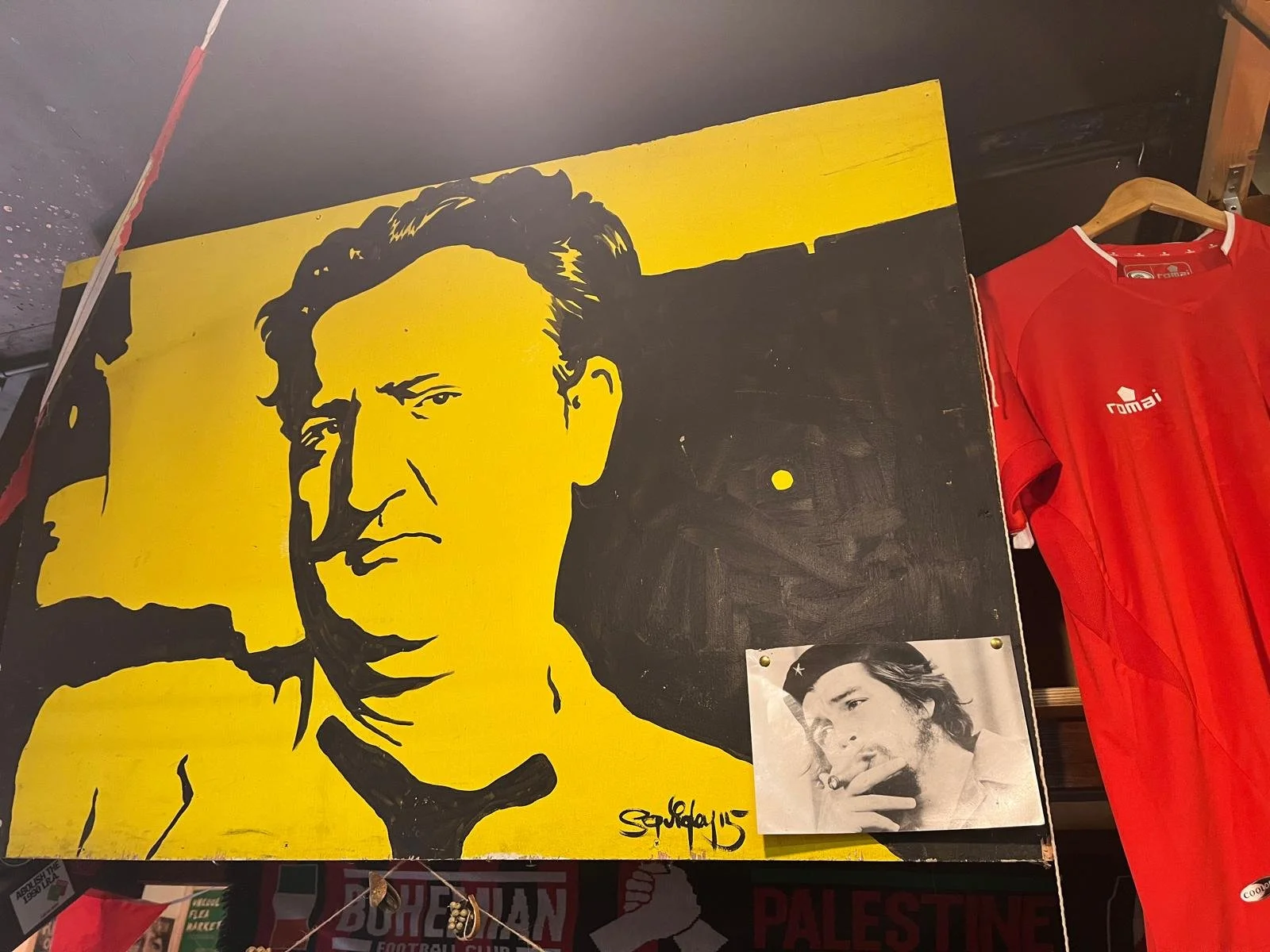
A poster of Brendan Behan on display at The Bang Bang Cafe Phibsboro.
I'm a Firestarter Too Says Behan Brother
It's not long before the sixty pounds I receive from RTÉ for my Kavanagh-Behan piece runs out. I start writing articles for newspapers including The Sunday Express, who make me their theatre correspondent. I get to see a lot of plays and interview playwrights like Peter Sheridan, writer of Mother of All the Behans, and Behan's biographer Ulick O'Connor, writer of A Trinity of Two —a play which tells the story of politician Edward Carson destroying writer Oscar Wilde in another libel witness box. I'm fascinated by the parallels with Costello and Kavanagh's cross-examination. But when I raise this in an interview with O'Connor at the Abbey Theatre, he's more obsessed with Behan's sexuality and propensity for violence. He's also keen to let me know that Behan held no fears for O'Connor himself because he had been a boxing blue at Oxford.
The Prodigy's Firestarter is a big hit at the time, and its video is never off the music channels. One VJ mentions that the old man who comes out on stage with Keith Flint wearing a green wig is none other than Brendan Behan's brother Brian. I immediately ring London and suggest interviewing him for The Express. When I speak to Brian, I pump him for any information about the court case and anything he can remember about his brother's relationship with Kavanagh.
I was very young, he insists. I don't remember much, and anyway Brendan was away a lot. He finally concedes that Kavanagh may have visited their house in Crumlin once to taste his ma's stew. As Brian speaks, I notice the words he uses, their cadence and his wry turns of phrase. They're not just like his brother's but also my own father's. This is no surprise seeing as all three men were working-class Dubliners born in the 1920s.
After I file the copy my editor rings to ask if Brian had mentioned Keith Flint at all. That was the point of the article, he reminds me, and not a long-dead drunken writer. He sounds angry. I lie and say Brian told me Keith was a bit of a hellraiser like himself, and they got on like a house on fire. The Express goes with the headline: I'm a Firestarter Too Says Behan Brother.
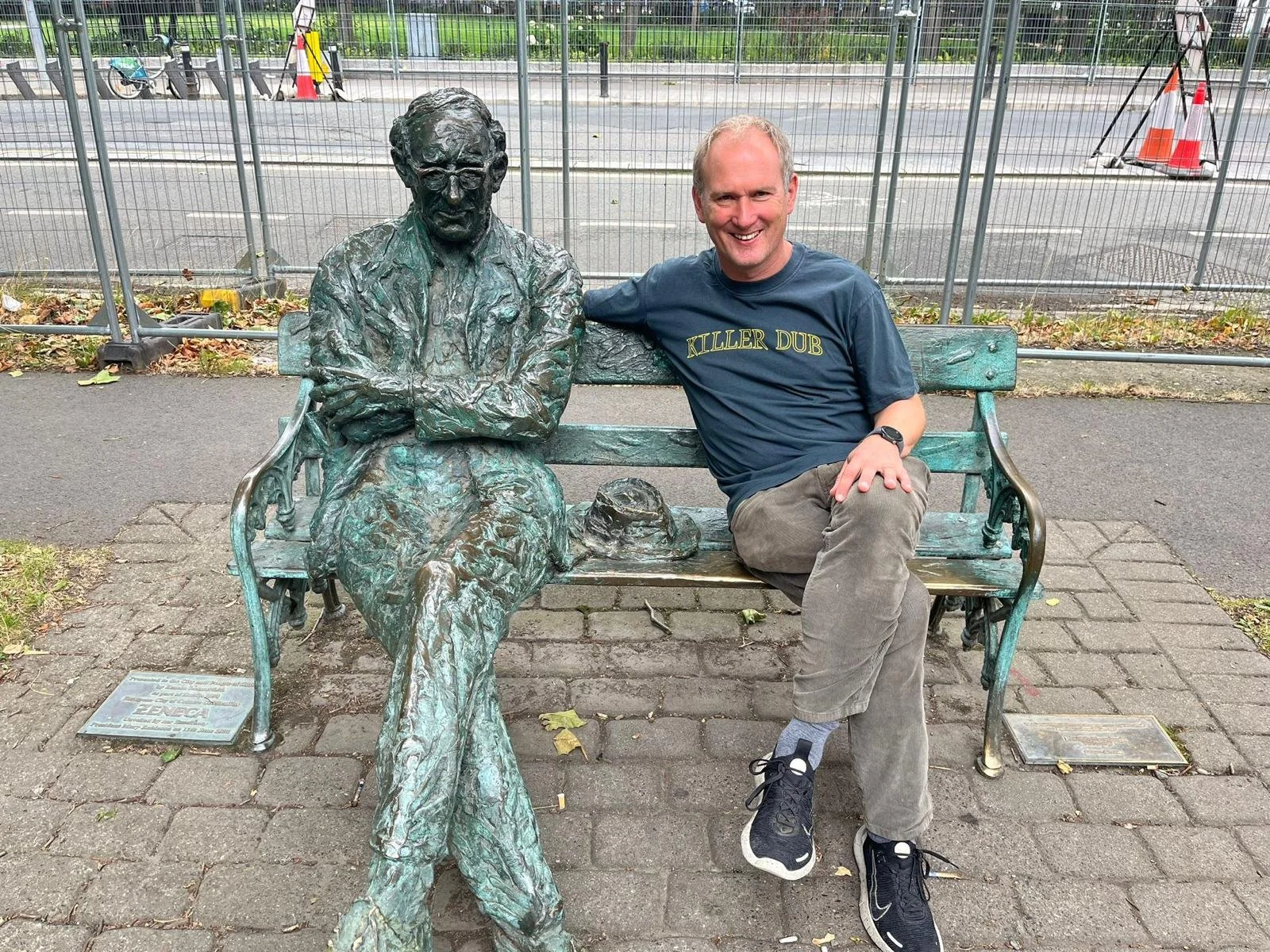
Patrick Kavanagh and Kevin Burns on a bench looking out over the Grand Canal.
Producers, Poets and Copyright
Within the year I start to work full time in RTÉ as a producer on The Gay Byrne Show. One day I suggest to Gay we read out a Kavanagh poem for an upcoming anniversary.
Copyright is always trickier to get than people realise, he warns. Gay seems to have mastered the art of always asking for new ideas but then questioning them so rigorously that you wish someone else had suggested them. Again, I realise presenters can be very different from their avuncular on-air personae. After a day of phone bashing, I'm talking to Peter Kavanagh in New York.
I own the rights to his poetry surely, Patrick's brother confirms. Send a hundred dollars to this address, and you can read the poem. He's so grumpy and the conversation so short that I don't have the opportunity to ask him about his brother's court case and I certainly don't have the courage to bring up Behan.
After I put down the phone, I stride down the corridor hoping to bump into someone with whom I can share my brush with literary greatness. RTÉ’s Radio Centre at that time is full of both published and aspiring writers slumming it to make ends meet. I settle for Arts Show producer Seamus Hosey.
I hope you didn't agree to give him any money, he tells me, then supplies the contact details of the real owner of the Kavanagh copyright. Later, another producer, Kavanagh aficionado and fellow Monaghan man Tommy McArdle tells me he tours a one-man Kavanagh play with his twin brother. I don't question the logic.
From the Tribunals to the Merrion Inn
The Kavanagh-Behan story is never far from my mind, and I raise it at every available opportunity. When I'm producing Gerry Ryan, he tells me he's a cousin of Behan and by marriage Eamonn Andrews. I find this origin story intriguing in understanding the broadcaster's considerable talents. On the whole I find his on-air and off-air personality don't differ greatly, although if pushed I'd say he's less brash and kinder in real life. As part of my research and on Gerry's recommendation, I take out the famous interview between Behan and Andrews and transcribe it.
While trawling the archives I find a remarkable audio account by Patrick Kavanagh broadcast in 1956 where he recounts his time in St. Kevin's, Marino, having a lung removed.
Working as producer of Tonight With Vincent Browne means spending most of your day speed-reading daily transcripts from tribunals, selecting the best bits for actors Joe Taylor and Malcolm Douglas to re-enact. Slowly the different inquiries start to wrap up, and I find myself sitting across from the presenter in The Merrion Inn as we go through some post-tribunal programme ideas. By this time, I'm used to the difference between presenters' on-air and off-air personalities. For some reason, I get on well with Vincent. I take out the same photostats I showed Tim and suggest we tell the story of the Kavanagh trial. He's interested in the legal element to the story and — unknown to me — has a longstanding fascination with John A. Costello and his son Declan. I don't say it, but I think he might also welcome the opportunity to explore the mind of a fellow curmudgeon.
We use the programme's tribunal format with Joe and Malcolm acting out exchanges from the trial, which are then contextualised by a panel of experts including author of Dead As Doornails Tony Cronin, renowned Kavanagh biographer Antoinette Quinn and religious poetry expert Father Tom Stack. During my research interviews Cronin shares stories of his dealings with the two men; Antoinette Quinn corrects my historical and literary assumptions; while Father Tom explains the spirituality of Kavanagh's poetry. On the final programme we read out the offending profile. The experts agree that it was almost certainly written by part-time poet and full-time civil servant, Valentine Iremonger.
The inscription Patrick Kavanagh wrote to Behan in the flyleaf of Tarry Flynn as displayed at The Patrick Kavanagh Centre.

Writers Phil Lynch and Kevin Burns performing an extract from Raglan Rogues in Walters, Dún Laoghaire in 2025
A Grave Coincidence
Making these programmes is when the idea of writing a play starts to bubble to the surface of my mind. I decide my play will feature not just the court case but also Kavanagh's time in hospital, Behan's interview with Eamonn Andrews, the visit to the Behan family home for stew and a re-imagining of the time they spent together while the flat was being painted.
A couple of years go by without me starting on the play, when an incredible coincidence happens. I'm in Shanganagh Cemetery for the burial of my father's brother, Paddy, when my attention starts to wander. I start to read the headstones of neighbouring graves when, two graves up, I find the name of Valentine Iremonger. There can’t be two Valentine Iremongers. This must be the man whom it's generally accepted wrote the Kavanagh profile in The Leader.
After the funeral, I ask my uncle and godfather Kevin Massey, now in his nineties and a retired undertaker, about the grave. He's never heard of Iremonger but he does remember working on Russell Street where Behan's family lived.
There was a lot of death there in the twenties and thirties, he tells me. TB. One family lost seventeen relations in one month. Cousins, mostly, all in the same building. They had to use sheets to lower the coffins through the window to the ground. The staircases were that narrow.
That night I include this detail as I finally start to write my play.
Writing the Play — and Hearing My Father's Voice
At this time the play’s title is Trial and Errors. When I’m writing Behan I start hearing my late father’s voice in my head. I remember some of his phrases, memories and jokes and put them in the mouth of his fellow Dubliner. Before long, I find myself using Vincent's voice as a way of getting into the cranky Kavanagh character.
I let my two sons, who are in secondary school and keen on drama, read an early draft. Dylan compliments me on the foreshadowing when Kavanagh presents the book to Behan in an early scene. Andrew feels both men are quite believable but unlikeable as characters.
I start sending scripts to anyone I think might help me improve the play. The author and playwright John McKenna, now retired but once a radio producer colleague, reads a few drafts, gives notes and advice. He also shares that he too is a distant cousin of Behan. Tommy McArdle tells me he wishes he had come up with the idea and tells me I've got Kavanagh's voice right. Peter Sheridan feels I've captured Behan.
In another twist, television presenter and Costello's biographer David McCullough joins Prime Time, where I'm now working. When he reads the play, he kindly tells me he can't wait to see the film. He's also able to confirm that Costello visited Kavanagh in hospital as Taoiseach as he had interviewed his driver for his book.

Kevin Burns introducing Raglan Rogues on stage Inniskeen at The Patrick Kavanagh Weekend 2024.
Raglan Rogues Takes Shape
I soon find that people who run theatres can see the value of the play and its themes. At different times The Civic Theatre in Tallaght, Smock Alley and The Mill Theatre in Dundrum all offer their space as a venue. I lose the title Trial and Errors in favour of the more dynamic Raglan Rogues. And even when theatres aren’t in a position to stage it, they take the time to read it and offer me encouragement.
The Abbey feels “the play demonstrates a warm passion towards the time period, crafting a charming, romantic snapshot of 1950s Dublin.....the writing is dynamic and energetic, resulting in a propulsive read”. Everything becomes a bit meta when they say “Behan’s sharp critique of the Abbey Theatre proved a particular highlight”. Fishamble think “Raglan Rogues is a well-researched and engaging retelling of the lives of Kavanagh and Behan. Both men are impressively reconstructed into dramatic characters, and their exchanges throughout the play are sharp, comical, and revealing”.
Donal Shiels from The Civic recommends Tracy Ryan as a director, and she brings invaluable professional theatre experience both as a writer and director. She introduces me to her longtime collaborator, musical director Kaylea Van Keith, and suddenly we're a tight team of three looking at how the script structure and music can best serve the story. As the show gets closer, the songs On Raglan Road and The Aul Triangle start to feature prominently.
Before long we secure a spot for a cast reading at the 2024 Kavanagh Weekend in Inniskeen with support from Monaghan County Council. Tracy recommends a young actor called Josh Winters for the Behan role and Sheila Moylette for the other roles. The festival director Darren McCreesh suggests talented writer and performer Declan Gorman for Kavanagh. On the first day of rehearsals in The Lab on Foley Street, I lay out the same newspaper photostats I showed to Vincent and Tim all those years ago.
As you might expect in the poet's hometown, the audience is very knowledgeable. They show their appreciation for Josh's stage presence and strong singing voice, and Sheila's natural flair for comedy. Afterwards, a well-preserved man in his sixties tells me that as a teenager he dug Kavanagh's grave with his father.
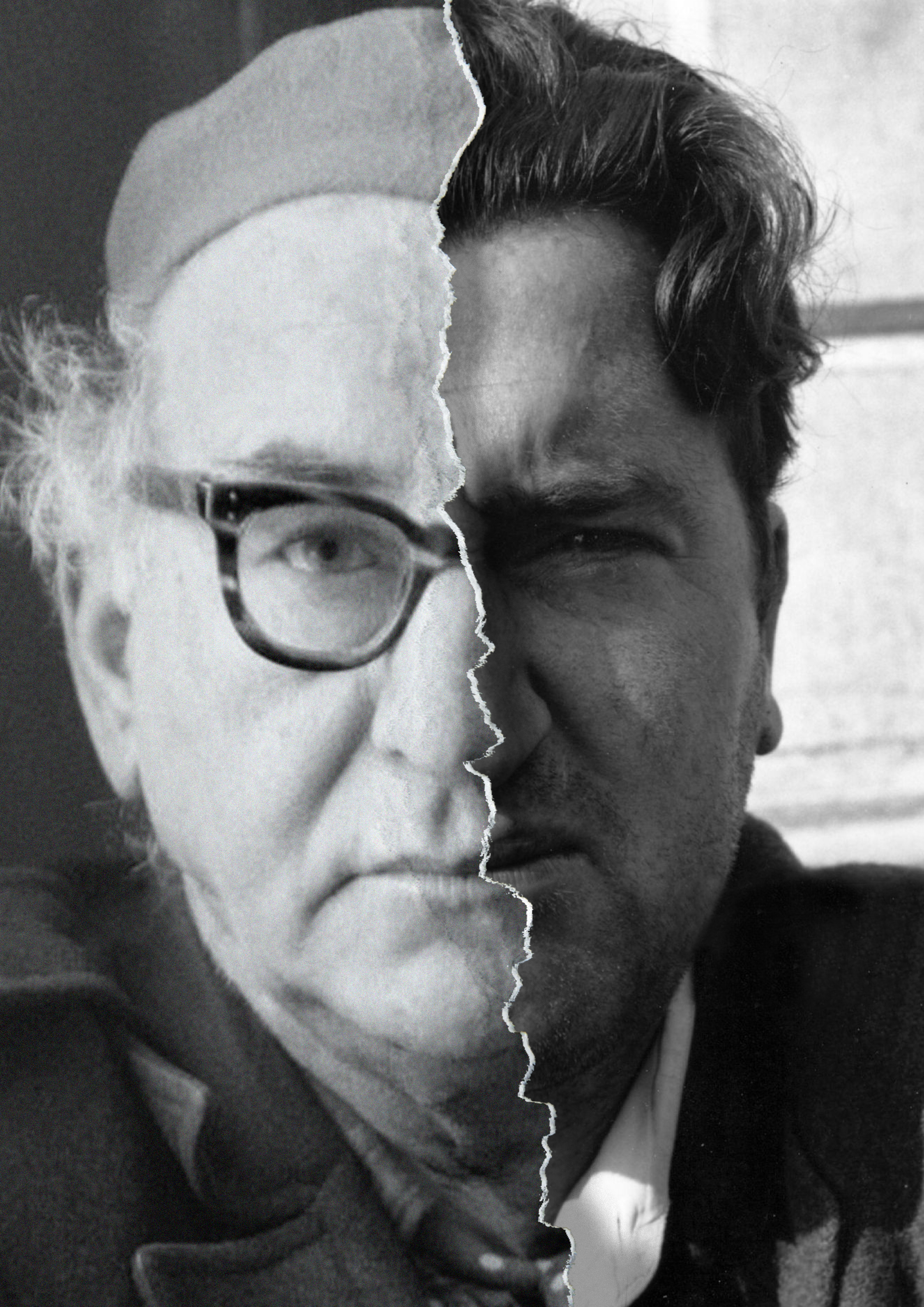
By the end of the year, we receive another grant — this time from Dún Laoghaire County Council — for a cast reading at The Mill Theatre in Dundrum. My family and friends attend, as do some members of my writers' group who have patiently helped me improve various versions of the work over the years. Another audience member approaches after the show: this time it's a nephew of Hilda Moriarty, Kavanagh's inspiration for On Raglan Road. Andrew, who ten years earlier felt the characters weren't very nice, is now a talented graphic designer and creates a compelling mash-up of their faces which we use for publicity.

Cast and crew at Inniskeen performance 2024. From left, Dominic O’Brien, Kaeylea Van Keith, Josh Winters, Sheila Moylette, Kevin Burns, Declan Gorman.
Thirty Years in the Making — Coming This August
I've lived with Behan and Kavanagh and their darkly comical relationship for more than thirty years. My passion has driven me to continually find out more about this story, be that through talking to the men’s relations and friends, experts or just listening to fans with opinions. Behan and Kavanagh's were very public figures for most of their lives and encountered and talked to a large number of people during that time. Those interactions are captured in archives, books, newspapers and memories which I've used to reimagine the men and tell the story of Raglan Rogues.
Collaborating with a talented cast, director and musical director we’ve produced cast readings that have allowed Dundrum and Inniskeen audiences to relive the emotions and challenging lives of their heroes.
Now in early 2027 we're bringing three performances of the full show with a talented cast, director and musical director to The Loft, in The Purty Kitchen in Dún Laoghaire.
All we need to do is raise some money to help make it the best show we can. See you there.